



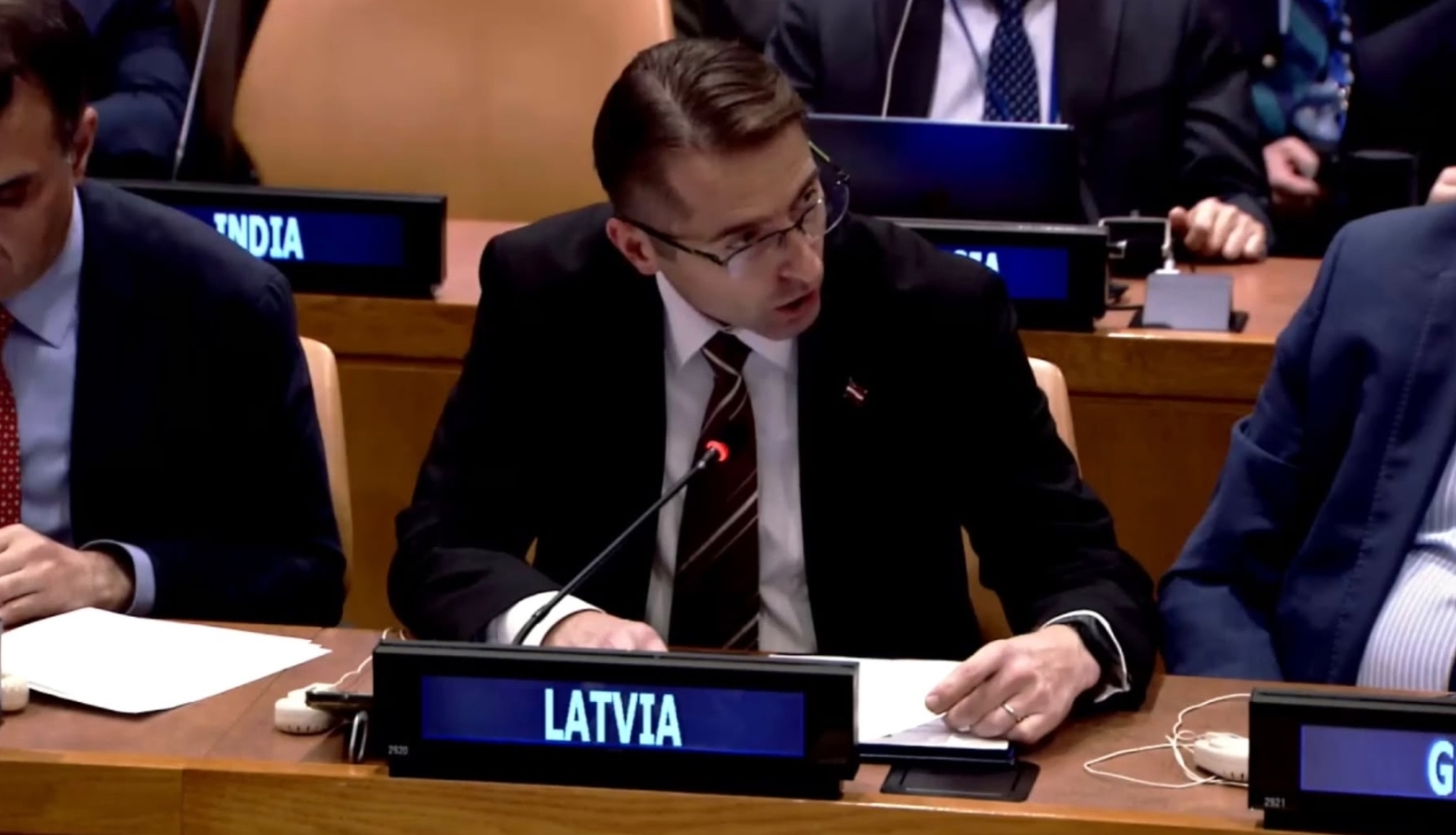
Thank you, Mister Chair,
At the outset, I wish to thank Liberia, and the DRC as co-sponsor, for convening this meeting and advancing the discussion on the links between natural resources and conflict, focused on prevention. We also thank the briefers for their insightful presentations.
Mister Chair, I will make three points.
First, good governance is the key to ensuring that natural resources contribute to sustainable development and don’t create or perpetuate conflict. Over the years, numerous international standards, due diligence recommendations, certification mechanisms and transparency initiatives have been created. They are important for setting best practices that inform national policies, fostering information sharing, accountable governance and responsible supply chains. However, while international cooperation is critical, it cannot substitute for national political commitment and the will to promote good governance, the rule of law and inclusive dialogue at home. That is the most effective preventive measure. When governance of natural resources follows these principles, places human rights at the core, seeks to benefit all, not just a few, and safeguards the environment, communities prosper.
Second, access to natural resources, particularly water and land, can generate tensions, and is therefore also an important entry point for peacebuilding. Across different contexts, mediation and peacebuilding efforts supported by the UN system have helped communities improve natural resource governance and prevent and mitigate conflict. Projects that address natural resource management can also generate other co-benefits, including opening up space for greater involvement of women and youth. The Peacebuilding Fund Thematic Reviews provide interesting insights from work in the field. For instance, peacebuilding projects in Yemen have succeeded in reducing water-related conflicts, improving water management and enhancing the participation of women. In Mauritania, youth were key actors in a project that also addressed issues related to shared natural resources between host and refugee communities. Community elders valued their contribution and later invited some of the young people to take part in village committees.
As climate change is increasing pressure on natural resources and, consequently, on people’s livelihoods, the importance of conflict-sensitive natural resource management and climate-sensitive conflict analysis is also increasing. UN peace operations and UN country teams must be supported in their efforts to anticipate and help mitigate the adverse impacts of climate change on peace and security, especially in settings already susceptible to resource-related competition and conflict.
Mister Chair,
Unfortunately, in too many places illicit exploitation and trade of natural resources continue to fuel conflict. This is my third and final point. Conflict financing through these illicit activities requires a response across entire supply chains from both state and private actors. It requires stronger due diligence, improved transparency, and traceability. While the response needs to be multifaceted, it is important to emphasize the collective responsibility to implement measures designed by this Council to restrain illicit actions. Enforcement of the Security Council's targeted measures aimed at stopping financing conflicts by illicit exploitation is highly reliant on the good faith of all Member States. We call on all Members States to shore up their implementation and cooperate with relevant panels of experts, to ensure that these measures are not circumvented and that their implementation can be effectively monitored.
Mister Chair,
To conclude, natural resources should help fulfil aspirations for peace and development, not put them further out of reach. The Security Council should take this consideration into account in its conflict prevention and peacebuilding efforts.
I thank you.