
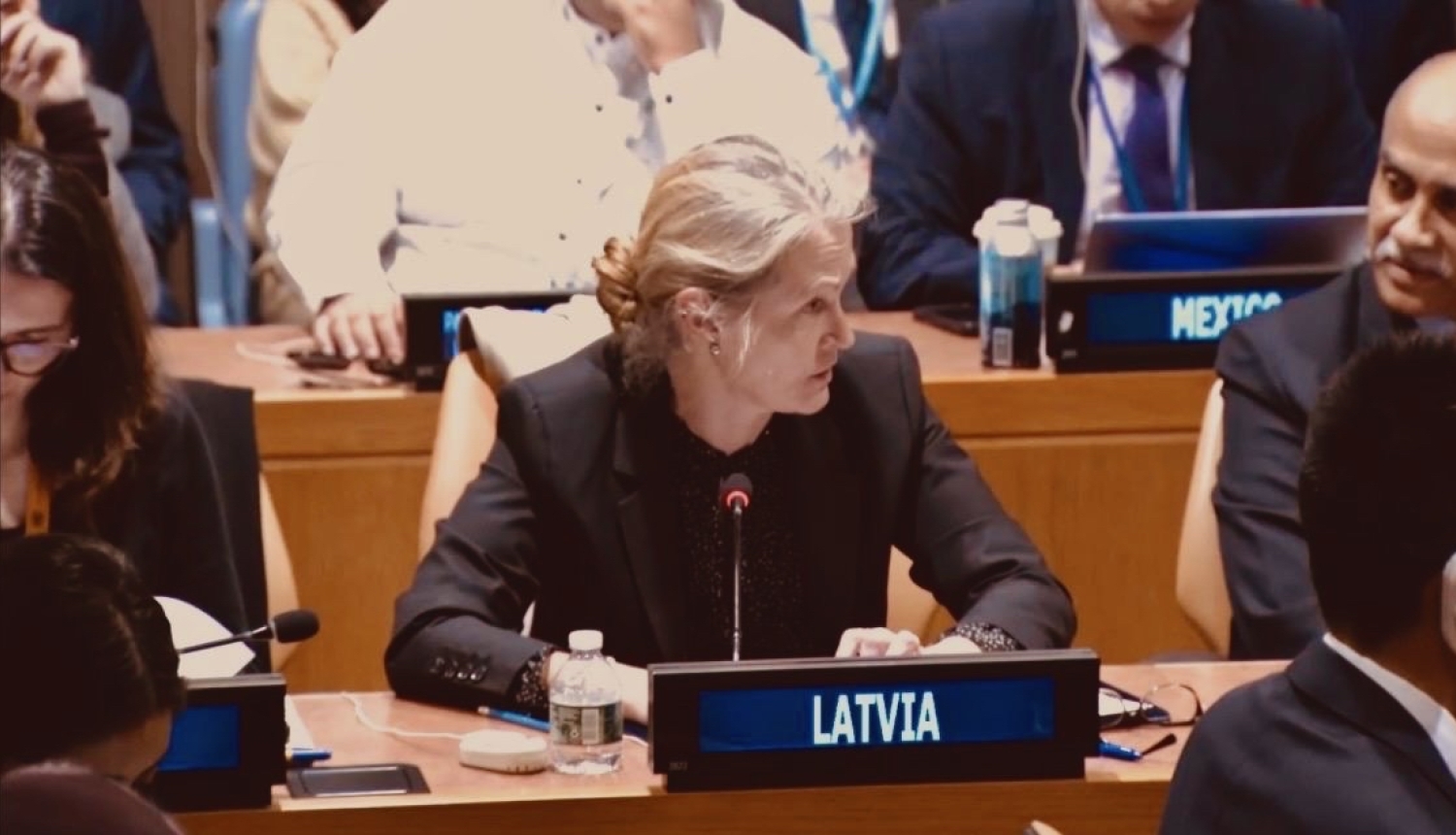
Thank you, Madam Chair.
I would like to begin by thanking Greece and all the co-sponsors for organizing this Arria meeting. I also thank the distinguished briefers for their valuable and valuable contributions.
I will make three points:
First – Latvia does share this sense of urgency for strengthening food diplomacy and proactive engagement through dialogue and political coordination to mitigate risks and build resilience in global food systems.
Understanding vulnerabilities and anticipating disruptions – particularly those exacerbated by conflict – is key to preventing food-related tensions from escalating into food insecurity or even starving civilian populations. Every avenue for utilizing dialogue and diplomacy to address these vulnerabilities within global food systems must be considered.
Secondly – maritime safety, regional stability, and food security have become central pillars of high-level diplomatic engagements. Current disruptions in the Black Sea, Red Sea and Strait of Hormuz illustrate how geopolitical instability directly impacts food security and requires a proactive approach of food diplomacy. These disruptions underscore the weaponization of food for political gain.
Russia’s war of aggression against Ukraine – one of the world’s largest food suppliers – has had a devastating impact on global food security. When discussing food diplomacy, the Black Sea Grain Initiative, signed in July 2022, stands as a prime example of the convening power of the good offices of the Secretary General and the importance of dialogue and cooperation in ensuring safe and reliable export of vital food supplies. However, one year later Russia withdrew from the deal. Ukraine and its partners in November 2022 reopened the corridor through the successful “Grain from Ukraine” program that is coordinated with WFP and delivers Ukrainian food supplies to the most vulnerable countries in Africa, Asia, and the Middle East. Yet food security is still being held hostage by Russia's relentless attacks against Ukrainian ports and commercial vessels belonging to an increasingly big number of flag states. These attacks demonstrate Russia’s disregard for the needs of millions facing hunger.
Iran similarly has been exploiting the suffering of the most vulnerable around the globe for its own benefit. Iran has restricted free and safe passage through the Strait of Hormuz, in direct violation of the Council Resolution 2817 and the UNCLOS. In doing so, it has disrupted numerous critical supply chains, compounding global food insecurity. We are also seeing a similar pattern re-emerging in the Red Sea and around the Bab-El-Mandeb Strait through attacks and intimidation by the Iran-backed Houthis.
Excellency, this leads to my third point – on action. When we have the means, failure to act is a choice. We need to rise to the challenge of implementing Resolution 2417, not merely reaffirming or repeating it. Latvia reiterates its full commitment to Resolution 2417 and its implementation.
Early warning must lead to early action. We emphasize the importance of integrating scientific evidence and early-warning information into diplomatic efforts to anticipate and mitigate food-related security risks, in close coordination with the relevant actors. We encourage the Secretary-General to continue providing swift reporting whenever a risk of conflict-induced famine emerges.
We must act when humanitarian access is denied or restricted. Humanitarian workers and farmers are never legitimate targets. It is crucial that the UN and other humanitarian organizations have full, rapid, safe and unimpeded access to deliver life-saving humanitarian aid, in accordance with humanitarian principles and international humanitarian law. And let me say, international law is very clear, and I can repeat it again: food must never be used as a weapon of war.
To conclude, food diplomacy and strengthened international cooperation must be leveraged as a tool for ensuring resilient global food systems and preventing conflict-induced hunger and famine.
We are committed to continued dialogue and cooperation to advance the role of food diplomacy in conflict prevention and international cooperation.
I thank you.